QUARTZVILLE CLAIM INFO:
Please NOTE:
Please do not share or post this link anywhere or to anyone without permission.


QUARTZVILLE CLAIM QCPGP
1600 ‘ elev
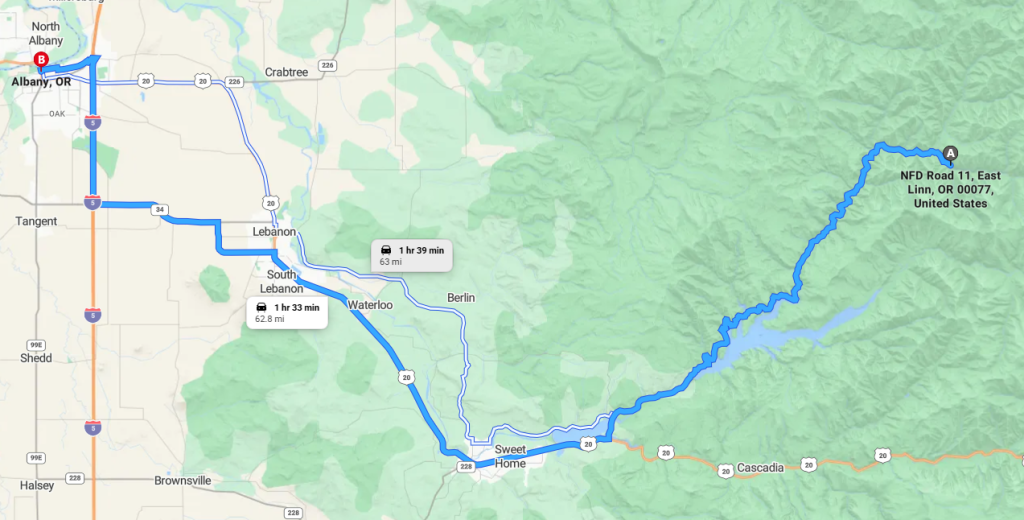
FROM SANTAIM HIGHWAY / US20 (heading east)
TURN LEFT ON TO QUARTZVILLE ROAD AND STAY ON THAT ROAD FOR ABOUT 24.5 MILES (road will change to N.F. 11, stay to the right at the 3-way split). THE CLAIM is about ¼ mile PAST THE N.F. SIGHNAND BRIDGE TO N.F. ROAD 805, there is a large pull on the riverside of the road. There is also more parking farther east down a dirt/mud camping area.
G.P.S. 44.57953 -122.33032
Please NOTE:
Please do not share or post this link anywhere or to anyone without permission.
What kind of gold can you expect there?
The gold around that part of Quartzville Creek is primarily placer gold—gold that has weathered out of older mineralized rock and been concentrated by the creek.
Based on the geology and documented finds in the Quartzville district:
- Fine gold and small flakes — probably the most common material in creek gravels.
- Small chunky pieces can occur where gold gets trapped in bedrock cracks, behind large rocks, and in natural riffles.
- Occasional small nuggets are possible, although they are much less common than fine gold.
- The area also has a lode-gold source in the surrounding volcanic rocks and quartz veins. Oregon DOGAMI records describe quartz veins, silicified zones and altered rhyolite/andesite associated with gold and silver deposits.
- Quartz, chalcedony, agate, jasper and volcanic rocks are also common in the creek gravels.
Basic equipment I’d take
For sampling and digging
- Gold pan — 14″ or 15″
- Classifier/screen — 1/4″ mesh is a good starting size
- 5-gallon buckets — 2–4
- Small shovel
- Pick or mattock
- Hand trowel
- Crevice tool or screwdriver
- Small pry bar
- Rock hammer
For processing
- Small sluice box, preferably around 8–12 inches wide
- Sluice mat/riffle system designed for fine gold
- Short sections of flexible tubing
- Water pump if you’re working where gravity-fed water isn’t practical
- Snuffer bottle
- Small vial/container for concentrates and gold
- Classifiers of different sizes if you want to experiment
For finding the better spots
- Magnet — useful for checking black-sand concentrations
- Small hand rake
- Crevice sucker
- Strong flashlight/headlamp for checking cracks
- GPS or phone mapping app
- Notebook/marker to record sample locations
For help in selecting the right equipment, contact Dan at
Information provided by Cindy & Ted
Please NOTE:
Please do not share or post this link anywhere or to anyone without permission.